From enquiry to delivery: how often do the same details change hands?
Follow one non-standard enquiry from the first call to delivery and you will see where work stalls. Usually not with people, but in the gaps between them.
4 min read
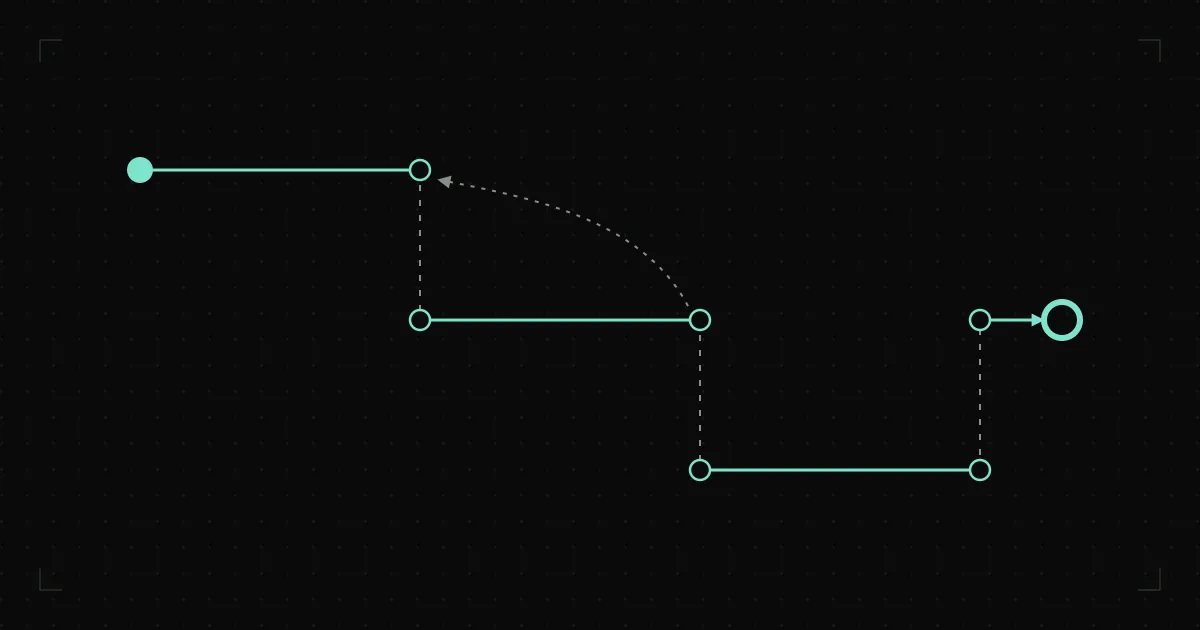
Picture a company that makes and installs metal fences and gates. There is plenty of work and the team is hard-working, yet the same complaints keep coming up: the quote is late, the customer is chasing, the installation date slips. Everyone in the business has an explanation for their own part, and everyone is right.
To see where the time goes, the best thing is to follow a single enquiry from start to finish. Not the worst one, just an ordinary one.
One enquiry, step by step
A customer rings asking for a quote for a fence with a gate around a new building, and whether it can be installed before the end of the month. This is the route that enquiry takes:
- Intake. The salesperson jots it down in a notebook during the call.
- Measurements and photos. The customer sends them by message to the salesperson’s own phone, once they have had a chance to measure.
- Can we make it? The salesperson forwards the message to the production manager and waits for them to look at it.
- Materials. Production asks purchasing for the price of the profiles; purchasing emails the supplier and waits.
- Price and discount. The owner approves the price verbally, when someone catches them in the corridor.
- Quote. The salesperson writes it up in Word and emails it.
- Change. The customer changes the colour and height in a new message, so a revised quote goes out.
- Confirmation. The customer confirms by phone.
- Production order. The salesperson prints the drawing and takes it to the workshop.
- Installation date. The salesperson promises it to the customer; the fitting crew hears about it later.
Each step makes sense on its own. The problem only shows when you look at them together.
Where the work actually waits
Work takes minutes, waiting takes days
The production manager answers within minutes — once they get round to reading the message. The owner approves the price in passing — once someone catches them. Most of the time, the enquiry isn’t with anyone at all. It sits between people, in someone’s inbox or phone.
A change reaches some people and not others
The customer changed the colour and height by messaging the salesperson. A new quote went out. But the production order was printed from the old version, because that was the one in the folder. The mistake is discovered on site.
A promise without the data
The salesperson promised an installation date so as not to lose the job. They never saw the crew’s calendar, because only the installation lead has it, in their own notebook.
Nobody sees the whole route
Everyone knows their own piece. When the customer calls to ask how things are going, the salesperson has to check with three people before answering.
Try it on one finished job
You don’t need any software for this, only patience.
- Take a job that was completed last month.
- Rebuild the whole route from emails, messages and notes: every handover, with the date and time where possible.
- For each step, mark how long was work and how long was waiting.
- Count how many times the same details — measurements, quantity, address, colour — were copied from one place to another.
The result often comes as a surprise. The work itself is a small part of the total time, and the same details were copied more often than anyone would have guessed.
What changes when an enquiry has a single record
From the first call, the enquiry exists in one place. Measurements, photos, every version of the quote, the approved price and the promised date sit with it. Everyone working on it looks at the same thing.
You can see who has the enquiry now and how long it has been waiting. A change from the customer reaches everyone who needs it, and the production order is created from the latest version, not from the folder. The installation date is picked from the crew’s calendar, so only achievable dates get promised.
People still make the same decisions they made before. They just stop searching, forwarding and retyping.
Where to start
With the step that waits longest. Once the route is laid out on paper, it is usually obvious at a glance — most often it is the price approval, or the check on whether something can be made at all.
Mapping a route like this and moving it into a system is at the heart of the work described on our business digitalisation and automation page. If you would like to map it together using one of your own jobs, write to us.