A little different every time: the cost of work with no agreed sequence
Work done slightly differently each time can't be learned, measured or automated. How to agree a sequence without losing the flexibility you need.
4 min read
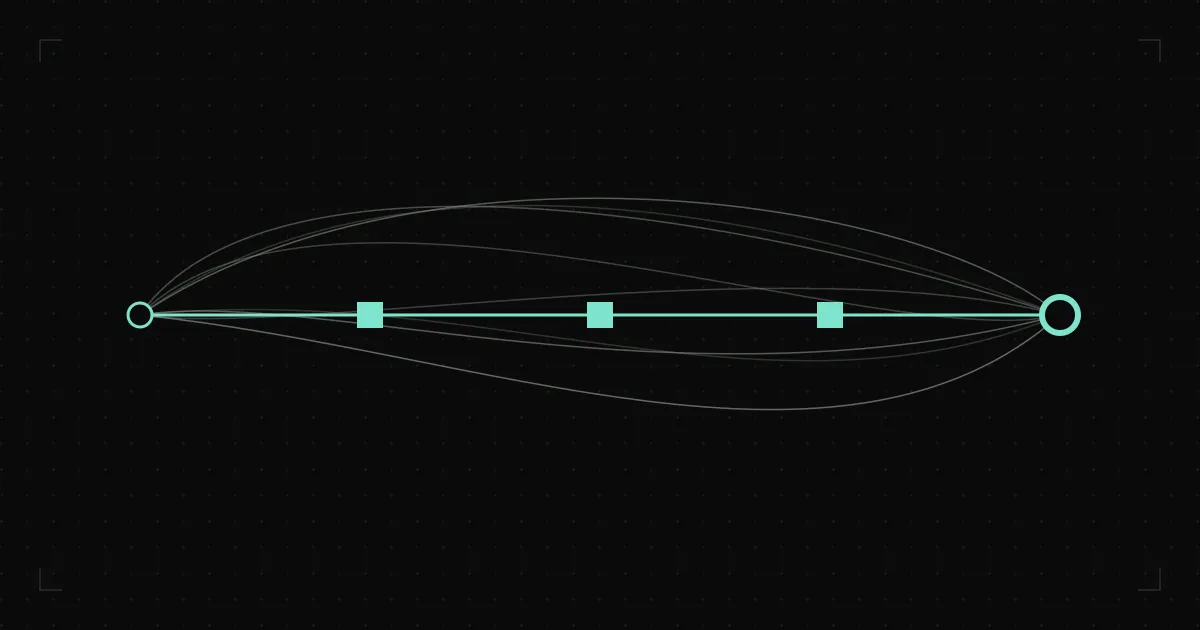
Ask three people in your company how a first order from a brand-new customer is handled. You will get three answers, all of them sensible. One checks the company in the business register first, another sends a pro forma invoice first, the third asks the manager whether this customer can have goods on credit.
Each of those three ways works. The problem is that there are three of them.
When variation is fine, and when it isn’t
Exceptions deserve freedom. An unusual customer, an unusual order, a situation that crops up once a year — that is where an experienced person should decide, and there is no point tying their hands with a rule.
Work that repeats every day is a different story. If it is done differently depending on who does it, that isn’t flexibility. It is a missing agreement.
Real flexibility looks like this: there is an agreed route, and it is agreed who may depart from it, and when.
What it costs when there is no agreed sequence
New people learn from whoever sits nearest
There is nothing to learn except the habits of the colleague at the next desk. Onboarding takes longer, and along with the useful habits the new person inherits someone else’s mistakes.
Quality depends on who picked up
The customer gets a different service depending on who answered the phone. One time the pro forma goes out straight away, the next time they wait two days for a check. They don’t see that as a difference between staff; they see an unreliable company.
Nothing can be measured
When every case follows a different route, nobody can say how long the work takes or where it gets stuck. There is an average, but it means nothing, because it adds up different things.
The work can’t be handed over
The owner or manager can’t delegate, because there is nothing to delegate except their own way of doing it. So the questions keep coming back to them.
The work can’t be automated
You cannot automate something people haven’t agreed on. The system would have to guess which of the three ways to apply. Anyone who tells you that’s not a problem will most likely build one person’s habits into the software and call it a process.
An agreement on one page
You don’t need a consultant with a thick manual for this. You need a few sessions with the people who do the work.
- Pick the three jobs done most often. Not the most important, the most frequent. That is where differences cost the most time.
- For each job, sit down with everyone who does it, not just the manager. The manager knows how it should go; they know how it actually goes.
- Write the steps in order, on one page. If it doesn’t fit on a page, there is too much detail, or it is really several jobs.
- Mark the points where decisions are made: who decides, and by which rule.
- Write down what counts as an exception and who can approve a departure.
- Try it for two weeks, then adjust whatever proved impractical in real work.
Three mistakes that turn an agreement into paperwork
A rulebook nobody reads to the end. When the agreement has thirty points, people remember three, and not the same three.
The loudest person’s way. Take the best from all three approaches. Each one usually has something the others lack.
An agreement nobody checks. If a month later nobody looks at whether people work to it, they drift back to the old way, with no ill intent at all.
Once the sequence is agreed
Only then can the work be learned in days rather than months. It can be measured, so you can see which step takes longest. And it can be automated: the step where the same details get retyped most is usually the first candidate.
The system then doesn’t have to guess. It guides people through the agreed steps, and when someone departs from them, the reason is recorded. After a few months those records show whether the agreement is right or needs changing.
Agreeing the sequence is the first step in all the work described on our business digitalisation and automation page: first we write down how the work really flows, and only then do we build. If you would like help reaching that agreement with your team, write to us.