One step, a connected flow, the whole job: three things people confuse
When someone offers you automation, ask what exactly: a single step, a connected chain of steps, or the whole job end to end. The difference is large.
4 min read
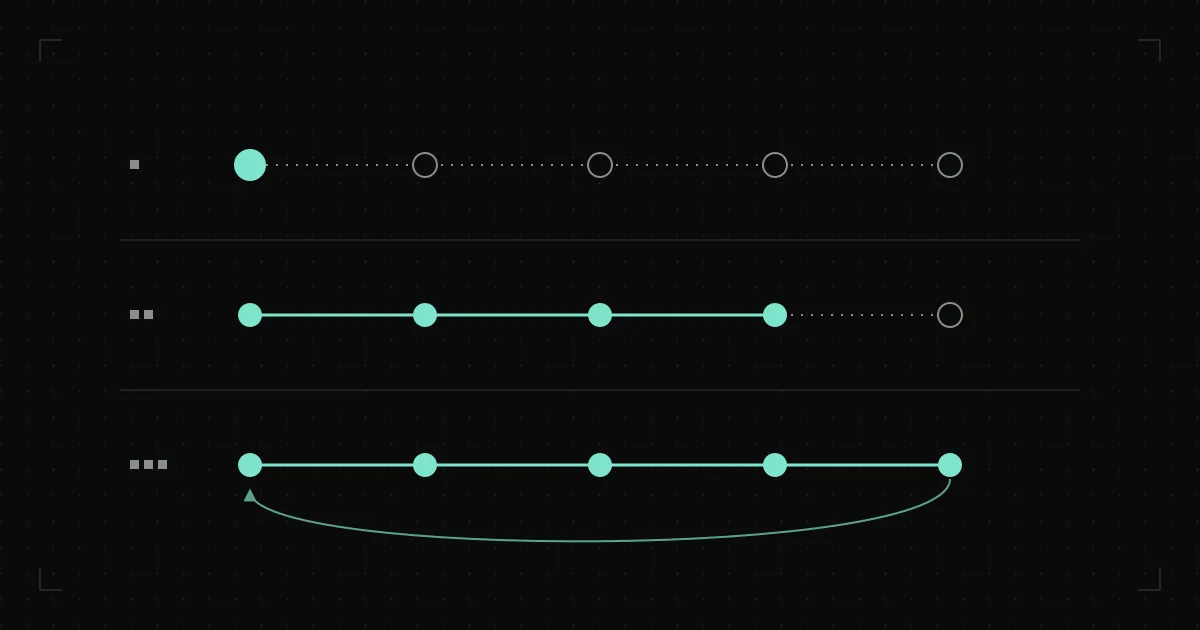
“Automation” has become a word that means everything and nothing. One vendor uses it to mean that the software reads a piece of data by itself. Another means that an entire job runs without a single detail being retyped. Both are telling the truth, and they are selling completely different things.
To compare offers, and to know what you actually need, it helps to tell three levels apart.
We will use one example throughout: a company that services air-conditioning units. A customer reports a fault, the dispatcher assigns a technician, the technician goes out and replaces a part, the customer signs the service report, and the office closes the job and bills it.
Level one: a single automated step
One task that a person used to do is now done by the machine.
In our example: the technician photographs the unit’s rating plate, and the system reads the model and serial number by itself. No copying tiny characters from the plate into a form, no transposed digits.
That is a good start. It is quick to introduce, not expensive, and easy to measure. But it has a limit: the step before and the step after stay the same. If the report still travels to the office on paper, the serial number that was read sits on the phone until the technician gets back. A minute has been saved in one place, but the job as a whole is no faster.
Level two: connected steps
Steps are linked so that the end of one triggers the next, and the right person gets the right details without anyone forwarding them.
In our example: when the customer signs the report on the technician’s phone, the part used is deducted from the van’s stock, the job in the office moves to “ready to bill”, and if that was the last such part in the van, purchasing receives a suggested order.
Someone or something keeps track of the sequence of steps and whose turn is next. The jargon for this is orchestration, but the name matters less than the substance: people still do their jobs; nobody carries information by hand from one step to the next any more.
This is usually where the biggest difference shows, because the waiting between people disappears. And that waiting often takes longer than the work itself.
Level three: the whole job, start to finish
From the first fault report to the paid invoice, the entire route runs through one flow. A person steps in only where a decision is needed — for instance, whether the repair falls under warranty, or whether to offer a replacement unit instead of an expensive repair. This is what people mean by end-to-end.
The advantage is that everything is visible and everything can be measured: how long from report to repair, where jobs wait longest, which technician has the most return visits.
The price is that this level needs a lot in place first: an agreed sequence of work, links to accounting and the warehouse, and often a field app. So it isn’t built in one go; you get there piece by piece.
How to tell what you need
- If one clearly bounded step hurts — retyping, counting, reading documents — level one is enough and pays back quickly.
- If work gets lost between people and departments, you need level two. A single automated step won’t fix that, however good it is.
- If you want work without retyping and an overview from report to payment, level three is the goal. But the road there runs through levels one and two, in that order.
The most common mistake is buying level one and expecting level-three results.
Four questions for any offer
- Which steps exactly does this cover, and which does it not?
- What happens to the data after this step — who picks it up, and how?
- What happens when something doesn’t follow the rule? Where does the exception end up, and who deals with it?
- How will we measure afterwards that the job as a whole is faster, not just one step of it?
Most of our projects start with the one step that hurts most, then connect the steps into a flow one at a time. What that work includes is set out on our business digitalisation and automation page. If you have an offer on the table and aren’t sure which level you are really buying, send it to us and we will look at it together.