Car dealers: which car is where, who reserved it and what the buyer was told
Dealers rarely lose a car, but often lose what's known about it: that it's at the bodyshop, that a deposit was paid, what the buyer was told.
5 min read
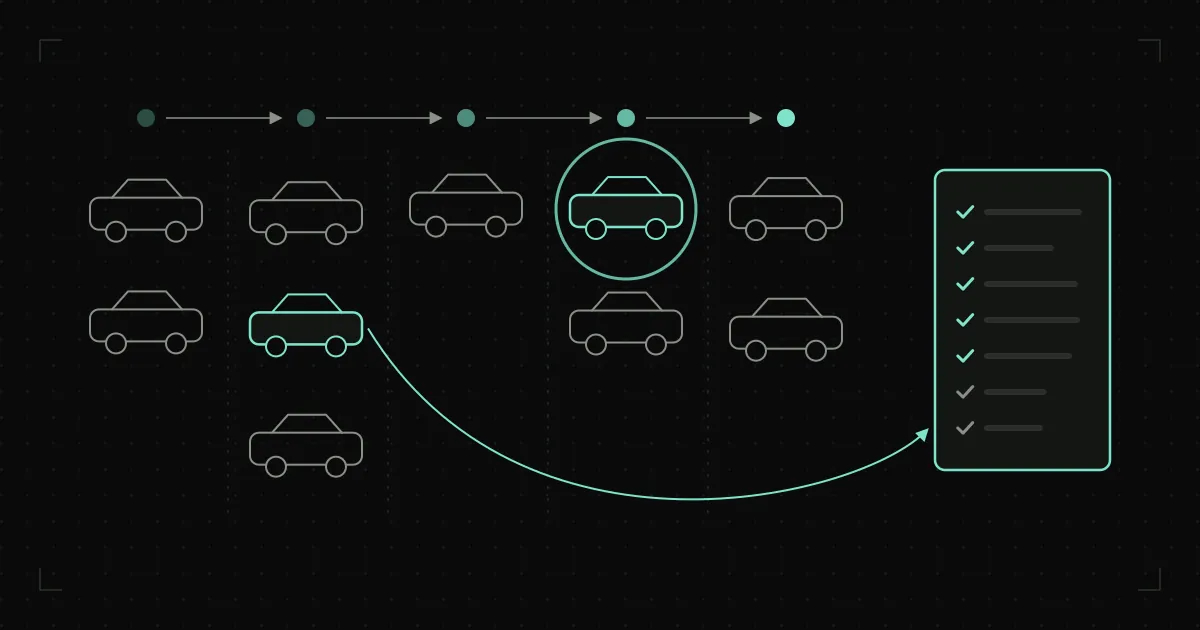
Saturday morning. A buyer arrives to collect the car he put a deposit on on Wednesday. The salesman who took the deposit is off today. A colleague finds the car, but another customer is already standing next to it, ready for a test drive, because the car was still advertised and nobody said it was reserved. Two buyers, one car and an awkward explanation.
That Saturday is invented, but anyone who sells used cars will recognise at least part of it.
It’s not the car that goes missing, it’s the information
The cars are all accounted for. What isn’t accounted for is what is happening with each of them right now. One is at the bodyshop, another is waiting for registration, a third is reserved until Tuesday, a fourth is sold but not yet collected. All of this is known, but in different people’s heads, on the board in the office and in text messages.
That is why software for a car dealer doesn’t start with a list of cars. It starts with the status of each car.
Every car has a status
Statuses vary from one dealer to the next, but they usually look something like this:
- bought, on its way to the forecourt
- in preparation: service, bodyshop, valeting
- ready and advertised
- reserved until a set date
- sold, waiting for paperwork
- handed over to the buyer
Every change of status has a name and a time: who sent the car to the bodyshop, who took the deposit, who handed over the keys. The question “where’s the white estate?” is then answered by looking at a screen, not by walking the forecourt and ringing the mechanic.
Status helps with adverts too. A car that isn’t ready shouldn’t be advertised, and a reserved car should stop being advertised the same day. When the advert depends on someone remembering to take it down, the phone keeps ringing about a car that is no longer for sale.
A deposit has a name and a deadline
A reservation is a promise to two parties at once: to the buyer, that the car will wait for him, and to colleagues, that they should stop offering it. If it is only written on a scrap of paper next to the keys, the second promise doesn’t hold.
When the deposit is recorded against the car, with the buyer’s name, the amount and the date the reservation runs to, the status changes for everyone at once. A reservation that lapses without a word from the buyer doesn’t hang around for weeks. The car goes back on sale, and a note of what happened stays with it.
The car’s file starts at intake
Buyers of used cars ask most about a car’s past: servicing, accidents, what has been replaced. The salesman answers with what he knows. The trouble is that this knowledge is gathered at intake, while the sale comes weeks later and is often handled by someone else.
So intake should follow the same order every time: documents, the service book if there is one, mileage, photos of the condition, any damage spotted, and what the previous owner or supplier said. If intake is done a little differently every time, the file is different every time too. We wrote about the cost of that in A little different every time: the cost of work with no agreed sequence.
Everything done before the sale goes into the file as well: what was serviced, what was replaced, what was repaired and who did the work.
What the buyer was told
The most sensitive record at a dealer is what the salesman told the buyer about the car’s condition. If a fault appears after the sale, the conversation is far calmer when both sides have the same sheet of paper: a list of what was known and said about the car, which the buyer saw before buying.
That list doesn’t need writing from scratch. It comes from the intake record and the preparation work. The salesman only adds anything specially agreed with the buyer, such as new tyres or a small service before collection. That agreement then also has a name and a deadline, so it doesn’t depend on who happens to be working on Saturday.
Part exchange: two cars in one deal
Buyers often come not just to buy but to trade in their own car. That is two deals tied into one: the valuation of their car, the figure you agreed on, the difference they pay, and a car that joins your stock.
When these are kept separately, the part-exchange car can easily end up on the forecourt with no intake record, because “it goes with the one we sold”. When the deal is recorded as one, with both cars in it, the part-exchange car gets its own file and its own status straight away, like any other car.
The accounts stay where they are
Invoices and the books are still kept in the accounting software, and the dealer system has no business interfering there. It only needs to pass on the sales details, so the same buyer and the same car aren’t entered twice in two places.
Write to us through the contact form with roughly how many cars you usually have in stock and where reservations are kept today: in a notebook, a spreadsheet or on a board. That quickly shows whether you need a whole system or whether records of status and car files are enough to start with. Both routes lead to the same work, CRM and ERP system design and build.