AI in retail is only as good as your product master data
Forecasts and recommendations learn from your data. If one product has three codes and returns are booked as negative sales, the AI learns the wrong lesson.
4 min read
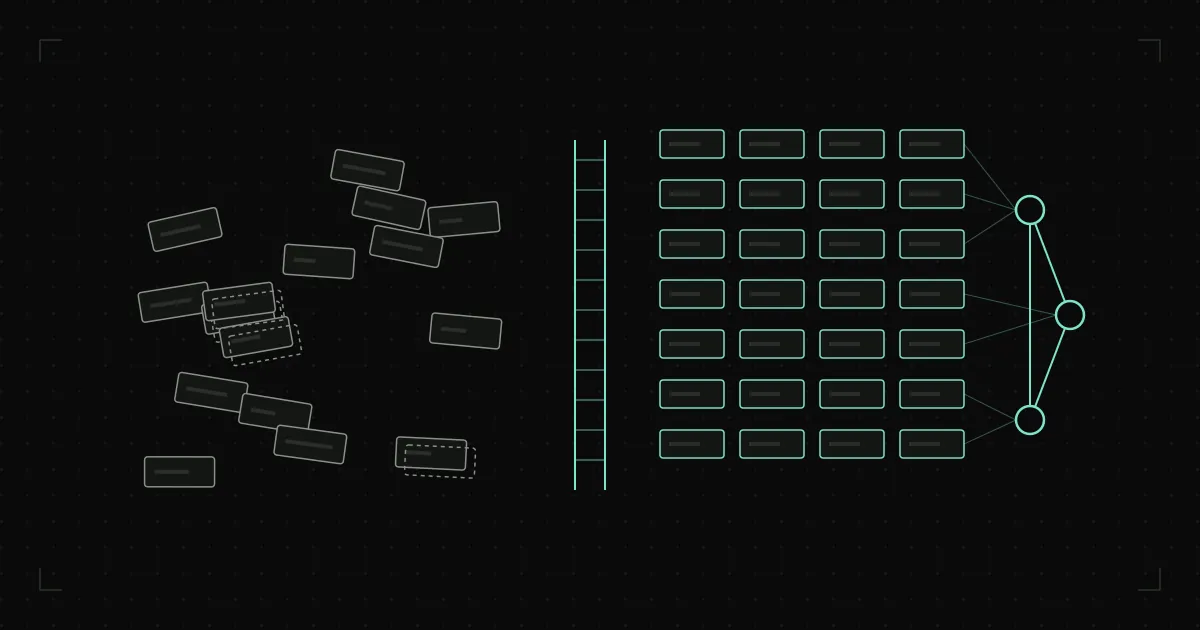
Pitches for AI in retail promise a great deal: sales forecasts, orders that place themselves, prices that adjust on their own. The technology exists and it works. What nobody says out loud in the presentation is that a model only knows what it can read from your data.
And in most shops, that data was never created for anything to learn from. It was created to print a receipt and close the till.
What a model sees when it opens your product list
Someone who has worked in the shop for years knows every quirk of the system and corrects for it without thinking. A model knows none of it. This is what it typically finds:
- the same product under two or three codes, because the supplier or the pack size changed, or someone could not find the old code and created a new one
- units of measure used interchangeably: single item, pack, crate
- products with no category, or filed under “other” alongside half the range
- returns booked as negative sales, write-offs booked as sales at zero price
- promotional prices that are not marked as promotions anywhere
- stock levels corrected only at the annual stocktake
The consequences are predictable. The model sees a product stop selling, when in fact it is selling under a new code. It sees a spike in demand that was really a promotion leaving no trace in the data. It suggests reordering goods already on the shelf, because the system’s stock has been wrong since the last delivery.
The model did not make a mistake. It learned exactly what you showed it.
Why “let the AI clean up the data” doesn’t solve it
AI can genuinely help with a clean-up. It can find products that are probably the same and propose them in pairs. But deciding which code stays and which goes has to be done by someone who knows the goods.
More importantly: if nothing changes in the way duplicates were created, a few months later the product list looks exactly as it did before. You tidied the output, while the machine producing the mess keeps running.
Where AI already works in retail
So that it doesn’t all sound far off: there are jobs where AI pays its way even with imperfect data, because its input is a document and a person checks anything doubtful.
- Supplier invoices and delivery notes. The system reads the lines, compares them with the purchase order and flags only what does not match. People review differences, not every line.
- Staff questions. An assistant that answers from your own procedures, price lists and supplier terms, and shows where the answer comes from so it can be checked.
- Suggested orders. As a proposal a person confirms or edits, and only once sales, returns and write-offs are recorded as separate things.
What these have in common: it is clear what the system does when it is unsure. It does not guess. It asks.
Check this before paying for an AI project
- One product, one code. Plus a rule for who may create a new product, with a mandatory check that it doesn’t already exist.
- Sales, returns, write-offs and promotions are recorded as four different things. Not as pluses and minuses on the same line.
- Goods receipts are entered when the goods arrive, not when someone gets round to it.
- There is a decision on what happens when the system is unsure. Who checks, how quickly, and where that is visible.
- Accuracy is measured on your own data before go-live, with a figure for how often the system gets it wrong. Not on the example from the demo.
If you have no answer to three of these five, the money is better spent first on a clean flow of data. That is not time lost on the way to AI; it is part of the way.
The order that pays off
First fix how the data comes into being, then put a model on top of it. Very often the first step that actually returns money is not AI at all, but receiving goods without retyping and a product list people can trust. Any AI that comes after that has something worth learning from.
Every AI project we take on starts with a test on your real data. If the model cannot do the job reliably enough, we say so before the budget is spent. Examples of that kind of work are on our AI automation page. If you have a specific case, write to us.